
Fred Roehl: Biographical Dossier (BD-02)
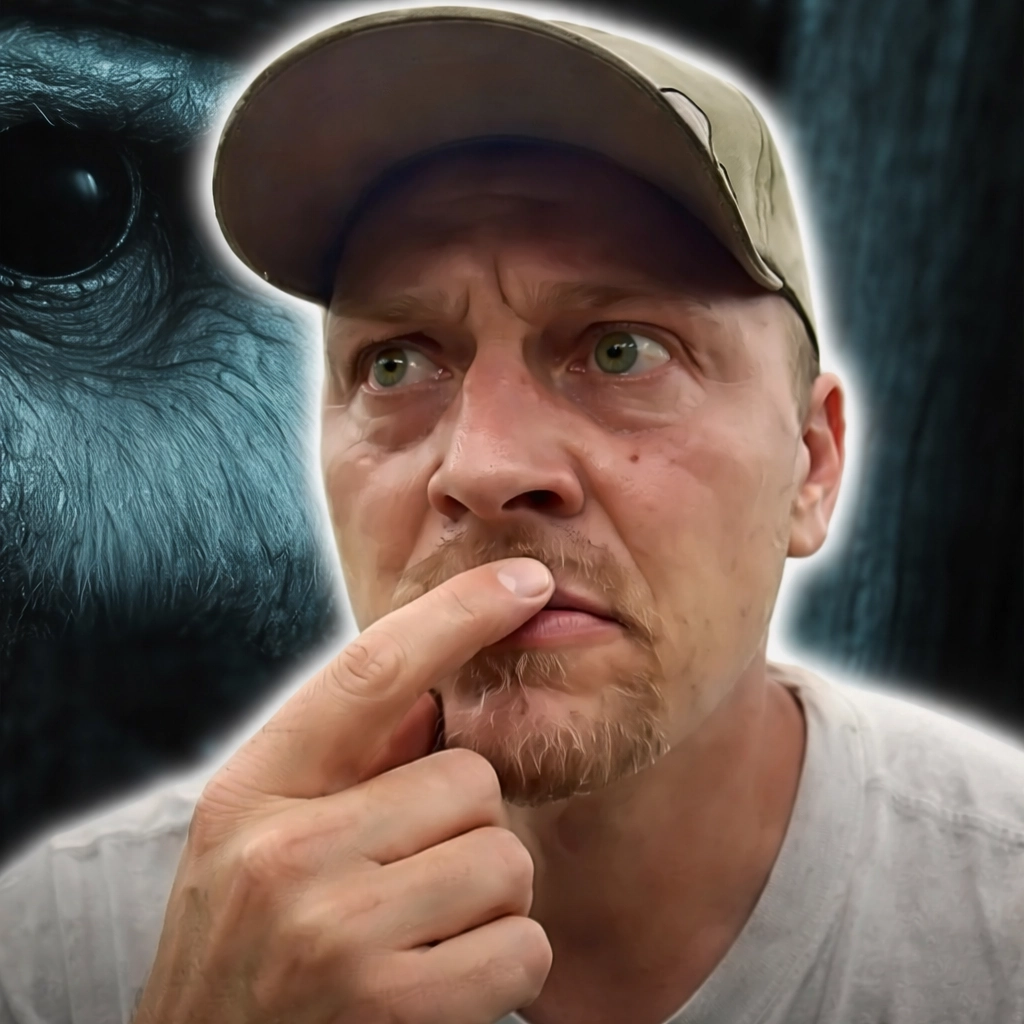
Dossier Code: BD-02
Classification: Internal Archive
Primary Hub: Cryptids
Subject Flags:
– Person of Interest
– Primary Witness
– Research Contributor
Geographic Focus: Bristol Bay region, Alaska, USA
Status: Active
Known Exposure Window: 1984–Present
Related Files: FR-01, WA-01
1. SUBJECT OVERVIEW
Fred Roehl is tracked by Beyond The Veil due to sustained, multi-decade proximity to anomalous wilderness phenomena in southwest Alaska, culminating in a high-risk, multi-entity encounter in 2006. The subject occupies a dual role within the archive as both primary witness and post-event research aggregator. His relevance is not limited to a single incident, but to the density, recurrence, and escalation pattern of exposure events across his lifespan.
2. BASELINE PROFILE (PRE-EXPOSURE)
Prior to the 2006 qualifying incident, Roehl was an experienced Alaskan outdoorsman raised in rural environments where wilderness competence was normative. He had extensive familiarity with river travel, hunting culture, and remote cabin use. Cultural exposure included Native Alaskan oral traditions referencing the “Hairy Man,” though these accounts were regarded as cautionary folklore rather than operational threat models.
Occupationally and behaviorally, Roehl demonstrated no public inclination toward anomalous research or media activity. His stated belief stance prior to 2006 can be characterized as pragmatic and non-speculative, with high confidence in his ability to identify known wildlife and manage environmental risk.
3. INITIAL QUALIFYING INCIDENT
Date: September 2006
Location: Remote riverside cabin, Nuyakuk/Nushagak River system, southwest Alaska
Incident Type: Sustained proximity threat, multi-entity encirclement
Immediate Outcome: Forced daytime escape under perceived lethal risk
During an overnight stay at an isolated cabin, Roehl and two family members reported being surrounded for several hours by multiple large, unidentified bipedal entities exhibiting coordinated behavior, vocal mimicry, and deliberate intimidation. The incident did not resolve through deterrence or passive avoidance.
See associated Field Report FR-01 for full reconstruction.
4. POST-INCIDENT BEHAVIORAL SHIFT
Following the 2006 incident, Roehl exhibited measurable changes in behavior and self-reported psychological state:
- Persistent hypervigilance in wilderness settings
- Long-term sleep disruption and recurring nightmares
- Altered threat assessment regarding previously familiar environments
- Increased caution bordering on avoidance of remote solo travel
- Periodic reliance on alcohol as a coping mechanism during the years immediately following the event
The event became a fixed reference point in subsequent decision-making and risk evaluation. Roehl has stated that certain coping behaviors emerged gradually rather than immediately and were later addressed. No evidence suggests exaggeration escalation over time; instead, public discussion of the incident increased only years after it occurred.
5. SECONDARY EXPOSURE EVENTS
Documented or reported exposures include:
- 1984 | Lake Aleknagik region
Exposure Type: Auditory anomaly (voices, whistling)
Notable Deviation: Retrospective reinterpretation as mimicry behavior - 1994 | Nushagak River
Exposure Type: Vocalizations, rock throwing
Notable Deviation: Group corroboration, inability to locate source - 1998 | Aguluwok River, Wood-Tikchik State Park
Exposure Type: Stalking behavior during canoe transit
Notable Deviation: Parallel movement along shoreline - Late 1990s–2000s | Multiple locations
Exposure Type: Visual glimpses, environmental disturbances
Notable Deviation: Pattern consistency across regions
These events establish recurrence rather than isolation.
6. ROLE EVOLUTION
Post-2006, Roehl transitioned through the following roles:
Witness → Private archivist → Public testimony provider → Research conduit
This evolution appears reactive rather than aspirational. Public disclosure occurred more than a decade after the qualifying incident and coincided with increased reports from third-party witnesses seeking contextual validation.
7. COMMUNITY POSITIONING
Within Alaskan and cryptid research communities, Roehl is positioned as a regional specialist focused on testimony preservation rather than hypothesis promotion. He maintains working relationships with independent researchers and documentary teams.
Reception among skeptics remains divided; however, criticism centers on interpretation rather than inconsistency. Media framing typically emphasizes the severity and psychological impact of the 2006 event.
8. ANALYST NOTES (RESTRICTED)
The subject recounts the primary 2006 incident with materially identical core details across interviews separated by more than fifteen years. Later additions included more specific details but do not alter event structure.
The incident functions as a psychological and operational rupture. Subsequent activities, including large-scale testimony collection, appear oriented toward documentation and warning rather than self-promotion.
The 2006 event did not terminate anomalous exposure. Earlier and later encounters suggest long-term environmental or behavioral proximity rather than coincidence.
It remains unresolved whether continued exposure correlates to geography, duration of wilderness immersion, or unknown selection factors. Available data does not permit resolution.
9. CROSS-REFERENCE INDEX
- Witness Accounts: WA-01
- Related Dossiers: Pending (regional witnesses, historical figures)
10. DOSSIER STATUS
Current Status: Open
Recommended Oversight Level: Active
Recontact Priority: High
FILE CLOSURE STATEMENT
This dossier reflects Beyond The Veil’s internal assessment based on available testimony, behavioral data, and contextual correlations. No definitive conclusions are drawn.